What happens when you challenge the assumption that a category has nothing new left to offer?
That was the question at the heart of our recent webinar with ManiLife founder Stu Macdonald, hosted by Spark’s Justin Healy and Audience Collective’s Group Strategy Director, Kathryn Ellis.
The conversation explored how ManiLife transformed peanut butter from a highly commoditised category into a distinctive brand, and what marketers can learn from that journey. Along the way, we discussed the role of market research, the dangers of category conformity, and why meaningful differentiation remains one of the biggest drivers of growth.
Here are five key takeaways from the discussion.
1. Different isn’t enough
Many brands focus on being different, and far fewer focus on being meaningfully different.
As Stu explained, categories are full of brands launching unusual flavours, limited editions and attention-grabbing innovations (just think of all of those limited edition beer flavours). While these tactics can generate short-term interest, they rarely create sustainable growth unless they solve a genuine consumer need or create a compelling reason to choose one brand over another.
ManiLife’s success was built on a superior product, a distinctive roasting process, a strong provenance story and a genuinely different consumer experience.
For marketers, the challenge is standing out in a way that matters.

2. Consumer insight shouldn’t be followed blindly
One of the most thought-provoking moments in the webinar centred on the role of consumer insight.
As Stu put it:
“The more you get into insight, the more you end up being told by consumers to be the same as everyone else.”
It’s a sentiment many marketers will recognise. If brands simply act on every piece of customer feedback at face value, they often find themselves moving closer to category conventions rather than further away from them.
That’s why the value of research lies not in collecting opinions, but in interpreting them.
At Spark, we believe the most effective insight programmes help brands uncover opportunities, tensions and unmet needs that consumers may never articulate themselves. Insight should provide direction, not consensus.
3. Know what should never change
As brands grow, compromise becomes inevitable.
New audiences, new channels, operational challenges and commercial pressures all require adaptation. However, the strongest brands understand which elements of their proposition are non-negotiable.
For ManiLife, that meant maintaining product quality, protecting its roasting process and preserving the authenticity of its supply chain story.
The challenge for marketers is understanding which aspects of a brand can flex as the business grows, and which are fundamental to maintaining distinction. Research can play an important role here, helping brands identify the assets that genuinely drive preference and loyalty before they are diluted through growth.

4. Growth isn’t always about innovation
One of the biggest misconceptions in marketing is that growth requires constant innovation.
During the webinar, Stu revealed that ManiLife’s UK penetration remains relatively low despite its success. For him, the opportunity is ensuring more people experience the products that already exist, rather than developing new flavours or products.
This is an important distinction.
Many brands chase growth through innovation before maximising the potential of their core offer. Increasing penetration can often deliver greater returns than expanding a portfolio. Before investing in the next product launch, marketers should ask a simple question: have enough people experienced what already makes our brand great?
5. The best brands balance difference and attraction
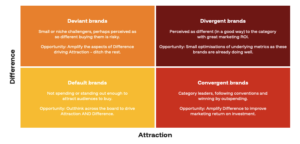
A key theme throughout the discussion was Spark’s Brand Divergence Index (BDI), which measures a brand’s ability to balance two critical drivers of growth: Difference and Attraction.
Brands that are highly different but lack broad appeal often struggle to scale. Equally, brands that are highly attractive but lack distinction can find themselves relying heavily on media spend to maintain market share.
The brands that achieve sustainable growth are those that balance both, making them, what we call, a Divergent brand. They retain the distinctive qualities that make them memorable while remaining attractive enough to appeal to a wider audience.
This balance is particularly important for challenger brands transitioning into the mainstream, as the challenge becomes growing yet not losing what made consumers notice you in the first place.
Final thoughts
The best insight helps brands understand what makes them different, why that difference matters, and how to scale it effectively. This is particularly valuable in increasingly crowded categories, where growth comes from having the confidence to stand apart.
Looking to uncover what makes your brand stand out?
Whether you’re launching a new product, growing a challenger brand, or trying to create meaningful differentiation in a crowded market, Spark can help.
Get in touch with us to discuss how consumer insight can help identify the opportunities that will drive your growth.
Start the conversation today by emailing hello@sparkmr.com.