From Crown Paints and Liverpool FC to Go.Compare and Welsh rugby, why great sponsorship is about much more than getting your logo noticed.

When I say Crown Paints, what comes to mind?
For me, it’s Liverpool Football Club in the 1980s. Ian Rush, Kenny Dalglish, those iconic red shirts and a team that seemed to win everything. Right across the chest, in white lettering, were the words Crown Paints.
I was a young Liverpool supporter growing up in Ireland. I certainly wasn’t in the market for a tin of emulsion in 1985, and I suspect I wasn’t particularly important to the Crown Paints marketing department. Yet more than 40 years later, the association is as strong as ever.
There’s something great about that and something commercially unresolved. Crown Paints sponsored Liverpool between 1982 and 1988, a period that delivered four league titles and a European Cup. The shirts became part of the club’s history and, for supporters of my generation, part of our childhood. Yet remembering Crown Paints doesn’t mean I ever bought their products. That distinction, between creating a durable memory and influencing a buying decision, is worth exploring when brands are investing millions in sporting partnerships.
It’s also one of the themes we’ll be discussing with Josh Tumbridge, Head of Brand & Campaigns at Go.Compare, in our upcoming Hard to Ignore webinar on 19 November, where we’ll explore how advertising and sponsorship can work harder together.
Welcome to the modern sporting circus

Attend any major sporting event today and you’ll find yourself surrounded by an extraordinary amount of commercial activity. Shirt sponsors, sleeve sponsors, pitch-side boards, stadium naming rights, broadcast partnerships, competitions, halftime entertainment, digital activations and hospitality experiences are all competing for a share of your attention.
Take rugby. Bank of Ireland has built an association with all four Irish provinces, while other brands compete for visibility across shirts, stadiums and matchday experiences. Some sponsor the teams, others the competitions, and others individual aspects of the experience. From the moment you approach the stadium until well after the final whistle, brands are everywhere.
For a marketer, it’s a fascinating environment. For a supporter, it’s simply part of the matchday carnival. Most people are there for the sport, their friends and the atmosphere, rather than the commercial messages surrounding them. This creates an interesting challenge for brands. Being present is relatively straightforward if you have the budget. Getting noticed is considerably harder, and becoming memorable for the right reasons is harder again.
Sponsorship is often subjected to less strategic scrutiny than traditional advertising. A considerable amount of research and creative development might go into a 30-second television commercial, yet a sponsorship involving a similar investment may be evaluated primarily through audience size, exposure and the commercial rights secured. Both investments deserve the same strategic discipline.
Being seen isn’t the same as being remembered
Professor Byron Sharp and the Ehrenberg-Bass Institute have fundamentally influenced how many marketers think about brand growth. Central to their work is mental availability: increasing the likelihood that a brand comes to mind in relevant buying situations.

Jenni Romaniuk’s work on distinctive brand assets builds on this, demonstrating the importance of making brands easy to recognise and correctly identify.
Both ideas are particularly relevant to sponsorship. Sporting partnerships can deliver enormous reach and repeated exposure, often in emotionally engaging environments. Yet those exposures only become commercially useful if people can connect what they’ve experienced to the sponsoring brand, and if the resulting memories help the brand come to mind when relevant.
My Crown Paints memory demonstrates the potential for sponsorship to create extraordinarily durable associations. What it cannot demonstrate is whether those memories ever helped the company sell more paint.
That’s the interesting commercial challenge: how do we turn sponsorship exposure into brand memories that have value beyond the occasion itself? And it starts with understanding how people actually encounter advertising.
One touchpoint among many
Marketing has long been fascinated by how many times someone needs to encounter a brand before they’ll buy it. The familiar “rule of seven” is frequently repeated, although there’s little credible evidence that seven exposures represent some universal threshold.
Consumer behaviour is considerably more complicated than that. Google’s Decoding Decisions research, exploring what it calls the “messy middle”, demonstrates how consumers move through a complex and often non-linear combination of information sources, experiences and interactions before making purchase decisions. The number and nature of those interactions varies enormously depending on the category, consumer and buying situation. Someone choosing a chocolate bar behaves very differently from someone comparing car insurance or choosing a mortgage.
We should also recognise that marketing’s influence begins long before someone actively considers a purchase. People accumulate memories about brands over time, often without giving them much conscious thought. Advertising, sponsorship, packaging, social media, word of mouth and personal experience can all contribute to those memories.
Sponsorship is one touchpoint in this wider ecosystem, and potentially a very powerful one. Its role isn’t necessarily to generate an immediate response, although some activations can do exactly that. More often, it can strengthen the familiarity, recognition and associations that make future advertising and purchase decisions more effective. That contribution depends on consistency: the sponsorship must use recognisable brand assets, reinforce the same associations as wider communications and build on previous exposures rather than starting again each time.
Great sponsorship should therefore be considered as part of an integrated brand-building programme, not a standalone marketing expense.
The medium should shape the message
One of my particular frustrations with sports sponsorship is pitch-side advertising that seems determined to communicate an entire marketing strategy in a single board. We’ve all seen it. A logo, a headline, a supporting paragraph, perhaps a product benefit, website address and a call to action, all squeezed into a space that a television viewer might glimpse for two seconds while following the ball. It’s asking an enormous amount of the audience.
Good advertising respects the context in which it appears. A pitch-side board isn’t a brochure, just as a six-second digital advertisement isn’t a two-minute television commercial. Think about the viewing experience. The camera is moving, the players are moving and the spectator’s attention is firmly on the action. In that environment, simplicity becomes a competitive advantage.
A distinctive colour, a recognisable asset, a memorable brand name or a very short message will often have a better chance of registering than a complicated proposition. The objective should be to communicate something the audience can realistically process, not everything the marketing department wants to say.
This is where the thinking of David Ogilvy remains relevant. Good creative is not simply about attracting attention, but about communicating something meaningful and making the brand memorable.

A sponsorship can offer different opportunities to communicate at different levels. Pitch-side advertising might reinforce distinctive assets, a social campaign might develop a richer message, and an experiential activation might create a deeper connection with supporters.
Each has a role. The mistake is treating them as interchangeable.
Sport can create an emotional advantage
There is something special about sport that makes sponsorship particularly interesting. Fans don’t simply watch their teams. They identify with them, celebrate with them, suffer with them and often build lifelong memories around them. Brands that become associated with those experiences have an opportunity to connect with consumers in environments where emotion is already running high.
And there’s evidence to support that opportunity. Research by System1 and Fuse examined sports-related advertising across the UK, US, Germany and France, involving more than 32,000 respondents. Among general audiences, the advertising tested performed broadly in line with global advertising averages. Among sports fans, however, the average emotional effectiveness score increased from 2.4 to 3.8 stars on System1’s scale.
The researchers called this uplift the “Sport Dividend”, reflecting the potential for sporting associations to generate stronger emotional responses among people engaged with the sport. These are predictive creative-effectiveness scores rather than direct measurements of sales uplift, but the findings reinforce something many marketers will recognise intuitively: people can respond differently to brands when those brands appear in environments they care about.
That doesn’t mean every sporting sponsorship will be effective. The quality of the creative, the relevance of the association and the ability to connect the experience back to the brand still matter enormously. An expensive sponsorship poorly activated may deliver less value than a smaller opportunity executed brilliantly.
What does a rugby match have to do with buying insurance?
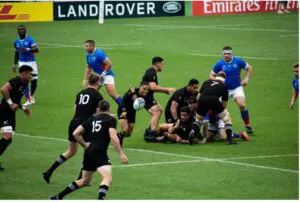
This is where category entry points become especially useful.
Ehrenberg-Bass describes category entry points as the cues and situations that prompt consumers to think about brands within a category. They might be practical, emotional, social or situational.
For insurance, these could include receiving a renewal notice, buying a car, moving home or wanting to reduce household costs. For paint, it might be redecorating a room, moving into a first home or preparing a house for sale.
Watching a rugby match isn’t ordinarily a category entry point for insurance. That doesn’t make rugby sponsorship irrelevant to an insurance-related brand. It means we need to understand precisely what the sponsorship is expected to contribute.
The sponsorship might build familiarity and trust through repeated exposure, make a distinctive brand asset more recognisable or reinforce an association with being savvy about household spending. Those are valuable brand-building outcomes, but they are not the same as connecting the brand to a buying situation. The sporting environment can build memories; wider marketing activity must then link those memories to relevant category entry points.
I believe that the relationship between sponsorship and advertising deserves much greater consideration. Working together, they can reinforce the same brand assets and associations across different occasions. Working independently, they risk becoming two expensive activities that happen to feature the same logo.
Sponsorship needs insight before activation
One of the more interesting examples we’ve been involved in at Spark is Go.Compare’s partnership with the Welsh Rugby Union. Go.Compare has a strong Welsh heritage and became the WRU’s first back-of-shirt sponsor in 2023. The partnership extends beyond the national teams into grassroots rugby, providing an opportunity for the brand to contribute to the communities that underpin the sport.
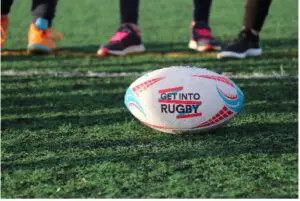
When Spark worked with Go.Compare to explore its grassroots strategy, the challenge wasn’t simply identifying attractive sponsorship activities. It was understanding the people involved in Welsh rugby, the pressures they faced and the role a commercial partner could credibly play.
We combined qualitative research with quantitative validation, exploring the experiences of volunteers, participants and communities to develop an evidence-based framework for sponsorship investment and activation.
The resulting work helped identify where the brand could make a meaningful contribution rather than relying on assumptions about what grassroots clubs might need. It’s a good example of how sponsorship can benefit from the same consumer-centred thinking that should underpin advertising, innovation and brand strategy.
The objective wasn’t simply to make the brand more visible. It was to help ensure that its involvement was relevant, valuable and credible to the people experiencing it. Of course, delivering value to a community and delivering commercial value to a brand aren’t automatically the same thing. The strongest sponsorships find ways to achieve both, ensuring the activity builds positive experiences while remaining clearly connected to the sponsor.
If we’re spending serious money, let’s measure it seriously
For all the sophistication of modern marketing, sponsorship evaluation can still place considerable emphasis on exposure measures. Media value, audience size, impressions and logo visibility all have their place, particularly when assessing whether contracted rights have been delivered.
They’re less helpful when we’re trying to establish what the investment has actually achieved. As we use ABC for Advertising understanding (Attention, Branding, Communication) I’d argue that sponsorship deserves a measurement framework built around three fundamental outcomes – just ask AMI
Attention: Did the activity reach the right people, and did they actually notice it?
Memory: Did the audience correctly associate the activity with the brand, and did it strengthen the distinctive assets or associations we were trying to build?
Impact: Did it contribute to stronger mental availability, more positive brand perceptions or commercial outcomes over time?
These questions don’t all require expensive or complicated research. Depending on the scale of the investment, brands can use creative testing, brand tracking, exposed-versus-unexposed comparisons, consumer feedback and longer-term commercial analysis to build a more complete picture. And of course, questions like these should be built into your tracker (if there not let’s talk, no seriously!)
Some sponsorship effects will be difficult to isolate from advertising and other marketing activity, and good evaluation should acknowledge those limitations rather than manufacture certainty. What I find harder to understand is why a major sponsorship investment would be made without first establishing what success should look like and how it might reasonably be measured.
The same standards we apply to advertising should apply to sponsorship. Both are investments in building brands and ultimately driving commercial results.
Beyond the logo
I’m a great believer in the potential of sponsorship. Sport provides access to audiences, emotions and shared experiences that are difficult to recreate through conventional advertising alone. Done well, sponsorship can become a distinctive and memorable part of a brand’s identity.
The opportunity becomes greater when sponsorship is treated as part of a broader marketing system, reinforcing brand assets and associations through complementary touchpoints. Before investing, marketers should be able to answer four questions: Who must notice it? What should they remember? How does it connect to the wider brand strategy? What evidence will show whether it is working? If the rights package cannot support clear answers, visibility alone is not enough.
Which brings me back to Crown Paints. Somewhere in my memory, Ian Rush is still scoring goals in a red Liverpool shirt with Crown Paints written across the chest. More than four decades later, that association is as vivid as ever.
I can’t tell you whether the sponsorship made me more likely to buy their paint. What I can tell you is that Crown Paints secured something many brands spend enormous sums trying to achieve: a lasting place in someone’s memory.
Imagine combining that kind of enduring association with a clear strategy for making the brand easier to think of, and easier to choose, when the buying moment arrives.
Now that’s a sponsorship worth investing in.
Join the conversation
On Thursday 19th November, 3–4pm GMT, I’ll be joined by Josh Tumbridge, Head of Brand & Campaigns at Go.Compare, and Kathryn Ellis, Group Strategy Director at Audience Collective, for Hard to Ignore: How Go.Compare Makes Advertising and Sponsorship Work Harder.
We’ll explore how brands can use insight to make more effective decisions about advertising, sponsorship and activation, drawing on Josh’s experience at Go.Compare and our work together around Welsh rugby.
And if you’re currently considering a sponsorship, questioning the value of an existing partnership or wondering how to make your investment work harder, I’d love to hear what challenges you’re facing. Always happy to share a few thoughts.
You can reach me at justin@sparkmr.com.
| Sources: | Why it’s useful |
| Jenni Romaniuk, Ehrenberg-Bass: Category Entry Points | Mental availability and the cues that bring brands to mind.
Ehrenberg-Bass Institute |
| Google: Decoding Decisions | Evidence of the Non-linear, multi-touchpoint consumer journey.
Think with Google |
| System1 and Fuse: The Sport Dividend | 32,000+ respondent study
System1 Group |
| Liverpool FC: History of Shirt Sponsors | Crown Paints years and sporting achievements.
Liverpool FC |
| Go.Compare: WRU Sponsorship | Go.Co and WRU partnership history and grassroots involvement.
Go.Compare |